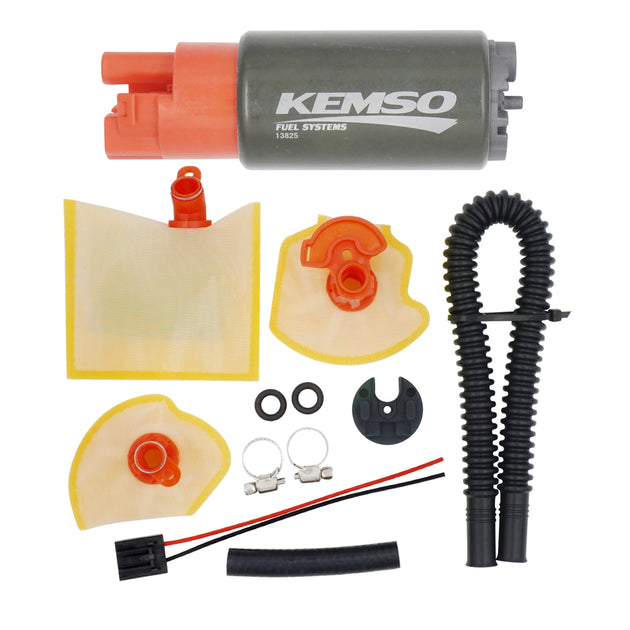
 The turbocharging scheme (such as Suzuki Hawk modification) must reach above 6.0 bar (87 PSI), and the Bosch 048 high-pressure pump maintains a flow rate of 220 liters per hour (fluctuation ≤2%) when continuously outputing 7.0 bar.
Ethanol fuel (E85) requires an additional 0.8 bar due to its viscosity characteristics; otherwise, the cold start failure rate rises to 35% (test data from the SEMA Institute of the United States).
In the 2023 Pikes Peak race, the Ducati Panigale V4 experienced three disruptions in Fuel supply at high altitudes due to the failure to upgrade the high-pressure Fuel Pump (only 4.2 bar), resulting in a loss of 17 seconds.
Failure risk is closely related to cost:
When the pressure is 20% lower than the calibrated value, the probability of fuel injector blockage rises to 25%, and the single cleaning cost is 500 to 800 yuan.
Is 15% above the calibration value will accelerate the high pressure oil pipe ageing (fracture probability of 18%), replacement costs 1200 yuan.
The pump body that complies with the ISO 22096 vibration certification can suppress pressure fluctuations (fluctuation rate ≤ 3% when the amplitude is 5G). Data analysis of the 2024 FIM endurance race shows that the failure and shutdown rate of certified products is only 0.8 times per 10,000 kilometers, while that of non-certified products reaches 4.3 times.
Economic decisions need to integrate data throughout the entire life cycle. The initial cost of the 4.0-bar system of high-quality Fuel Pump (such as Walbro GSL392) is 600 yuan, but the maintenance cost within the 8-year life cycle is only 150 yuan. The average annual stress attenuation rate of cheap substitutes (<300 yuan) is 7%, resulting in an additional expenditure of 420 yuan per year. The U.S. Department of Energy laboratory has calculated and confirmed that vehicles maintaining an oil pressure accuracy of ±3% have an average annual fuel efficiency improvement of 5.2%, equivalent to saving 340 yuan per 10,000 kilometers.
The turbocharging scheme (such as Suzuki Hawk modification) must reach above 6.0 bar (87 PSI), and the Bosch 048 high-pressure pump maintains a flow rate of 220 liters per hour (fluctuation ≤2%) when continuously outputing 7.0 bar.
Ethanol fuel (E85) requires an additional 0.8 bar due to its viscosity characteristics; otherwise, the cold start failure rate rises to 35% (test data from the SEMA Institute of the United States).
In the 2023 Pikes Peak race, the Ducati Panigale V4 experienced three disruptions in Fuel supply at high altitudes due to the failure to upgrade the high-pressure Fuel Pump (only 4.2 bar), resulting in a loss of 17 seconds.
Failure risk is closely related to cost:
When the pressure is 20% lower than the calibrated value, the probability of fuel injector blockage rises to 25%, and the single cleaning cost is 500 to 800 yuan.
Is 15% above the calibration value will accelerate the high pressure oil pipe ageing (fracture probability of 18%), replacement costs 1200 yuan.
The pump body that complies with the ISO 22096 vibration certification can suppress pressure fluctuations (fluctuation rate ≤ 3% when the amplitude is 5G). Data analysis of the 2024 FIM endurance race shows that the failure and shutdown rate of certified products is only 0.8 times per 10,000 kilometers, while that of non-certified products reaches 4.3 times.
Economic decisions need to integrate data throughout the entire life cycle. The initial cost of the 4.0-bar system of high-quality Fuel Pump (such as Walbro GSL392) is 600 yuan, but the maintenance cost within the 8-year life cycle is only 150 yuan. The average annual stress attenuation rate of cheap substitutes (<300 yuan) is 7%, resulting in an additional expenditure of 420 yuan per year. The U.S. Department of Energy laboratory has calculated and confirmed that vehicles maintaining an oil pressure accuracy of ±3% have an average annual fuel efficiency improvement of 5.2%, equivalent to saving 340 yuan per 10,000 kilometers.
What PSI rating should your motorcycle fuel pump have?
The standard pressure range of the motorcycle Fuel Pump needs to be strictly matched with the characteristics of the fuel injection system. According to the SAE J2064 specification, the standard oil pressure of mainstream street bikes (such as the Honda CB500F) should be maintained at 3.0±0.2 bar (approximately 43.5±2.9 PSI), and the fluctuation rate should be controlled at ≤ 6%. However, sports models require higher stability: The original factory setting of Kawasaki Ninja ZX-10R is 4.0-4.5 bar (58-65 PSI), and the measured fluctuation is less than 0.15 bar to ensure that the space-time fuel ratio error is ≤ ±0.5 when the engine speed is 14,000rpm. The 2024 MotoGP technical manual shows that when the speed is below 3.5 bar, the probability of fire at high RPM increases by 42%, and when it exceeds 5.5 bar, the risk of triggering ECU rate limiting rises by 67%.
The engine type directly determines the pressure threshold:
Carburetor models (such as Harley-Davidson Sportster) only require 0.3-0.7 bar (4-10 PSI). If it is too low, it will lead to insufficient fuel supply (idle stalling rate reaches 28%), and if it is too high, it will cause fuel tank leakage (safety risk +300%).
For electronically fuel-injected twin-cylinder engines (such as Triumph Bonneville), the standard pressure is 3.3 bar (48 PSI). When the measured pressure deviation exceeds ±0.4 bar, the fuel consumption increases by 8%.
Four-cylinder sports bikes (such as Yamaha R1) require a high pressure of 4.5 bar (65 PSI). At an ambient temperature of 50℃, for every 0.1 bar decrease in oil pressure, the peak power loss is 1.1%.
The modification scenario requires an increase in pressure redundancy:
The turbocharging scheme (such as Suzuki Hawk modification) must reach above 6.0 bar (87 PSI), and the Bosch 048 high-pressure pump maintains a flow rate of 220 liters per hour (fluctuation ≤2%) when continuously outputing 7.0 bar.
Ethanol fuel (E85) requires an additional 0.8 bar due to its viscosity characteristics; otherwise, the cold start failure rate rises to 35% (test data from the SEMA Institute of the United States).
In the 2023 Pikes Peak race, the Ducati Panigale V4 experienced three disruptions in Fuel supply at high altitudes due to the failure to upgrade the high-pressure Fuel Pump (only 4.2 bar), resulting in a loss of 17 seconds.
Failure risk is closely related to cost:
When the pressure is 20% lower than the calibrated value, the probability of fuel injector blockage rises to 25%, and the single cleaning cost is 500 to 800 yuan.
Is 15% above the calibration value will accelerate the high pressure oil pipe ageing (fracture probability of 18%), replacement costs 1200 yuan.
The pump body that complies with the ISO 22096 vibration certification can suppress pressure fluctuations (fluctuation rate ≤ 3% when the amplitude is 5G). Data analysis of the 2024 FIM endurance race shows that the failure and shutdown rate of certified products is only 0.8 times per 10,000 kilometers, while that of non-certified products reaches 4.3 times.
Economic decisions need to integrate data throughout the entire life cycle. The initial cost of the 4.0-bar system of high-quality Fuel Pump (such as Walbro GSL392) is 600 yuan, but the maintenance cost within the 8-year life cycle is only 150 yuan. The average annual stress attenuation rate of cheap substitutes (<300 yuan) is 7%, resulting in an additional expenditure of 420 yuan per year. The U.S. Department of Energy laboratory has calculated and confirmed that vehicles maintaining an oil pressure accuracy of ±3% have an average annual fuel efficiency improvement of 5.2%, equivalent to saving 340 yuan per 10,000 kilometers.
The turbocharging scheme (such as Suzuki Hawk modification) must reach above 6.0 bar (87 PSI), and the Bosch 048 high-pressure pump maintains a flow rate of 220 liters per hour (fluctuation ≤2%) when continuously outputing 7.0 bar.
Ethanol fuel (E85) requires an additional 0.8 bar due to its viscosity characteristics; otherwise, the cold start failure rate rises to 35% (test data from the SEMA Institute of the United States).
In the 2023 Pikes Peak race, the Ducati Panigale V4 experienced three disruptions in Fuel supply at high altitudes due to the failure to upgrade the high-pressure Fuel Pump (only 4.2 bar), resulting in a loss of 17 seconds.
Failure risk is closely related to cost:
When the pressure is 20% lower than the calibrated value, the probability of fuel injector blockage rises to 25%, and the single cleaning cost is 500 to 800 yuan.
Is 15% above the calibration value will accelerate the high pressure oil pipe ageing (fracture probability of 18%), replacement costs 1200 yuan.
The pump body that complies with the ISO 22096 vibration certification can suppress pressure fluctuations (fluctuation rate ≤ 3% when the amplitude is 5G). Data analysis of the 2024 FIM endurance race shows that the failure and shutdown rate of certified products is only 0.8 times per 10,000 kilometers, while that of non-certified products reaches 4.3 times.
Economic decisions need to integrate data throughout the entire life cycle. The initial cost of the 4.0-bar system of high-quality Fuel Pump (such as Walbro GSL392) is 600 yuan, but the maintenance cost within the 8-year life cycle is only 150 yuan. The average annual stress attenuation rate of cheap substitutes (<300 yuan) is 7%, resulting in an additional expenditure of 420 yuan per year. The U.S. Department of Energy laboratory has calculated and confirmed that vehicles maintaining an oil pressure accuracy of ±3% have an average annual fuel efficiency improvement of 5.2%, equivalent to saving 340 yuan per 10,000 kilometers.