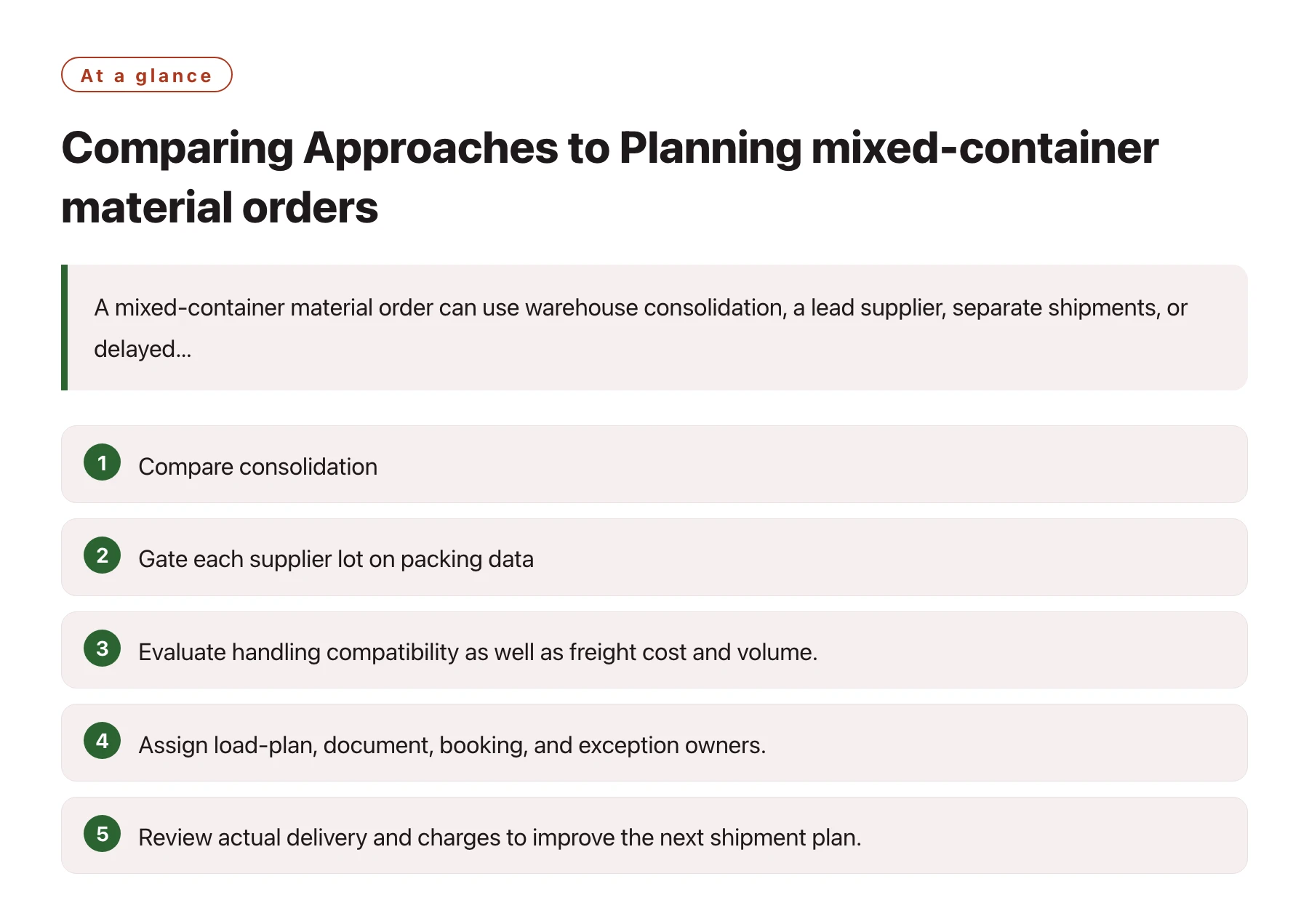
A mixed-container material order can use warehouse consolidation, a lead supplier, separate shipments, or delayed dispatch. Buyers should compare actual cargo readiness, compatibility, storage and handling costs, documentation, delivery priorities, and the risk that one late lot will hold the rest.
Key takeaways
- Compare consolidation, lead-supplier coordination, separate shipments, and waiting.
- Gate each supplier lot on packing data, inspection, documents, and release.
- Evaluate handling compatibility as well as freight cost and volume.
- Assign load-plan, document, booking, and exception owners.
- Review actual delivery and charges to improve the next shipment plan.
The lowest quoted freight option may create extra storage, handling, or delay. Comparing complete shipment approaches helps buyers understand the operational cost of each choice.
Choose a consolidation approach by shipment profile
Mixed material orders can be organized in several ways. A buyer may have each supplier deliver to a consolidation warehouse, use a lead supplier to coordinate the other lots, book separate shipments, or delay dispatch until a combined order is ready. Compare these approaches against cargo volume, readiness dates, product compatibility, destination timing, and who can control the handoffs.
A consolidation warehouse offers a central point for receipt, count, labeling, and loading. It adds handling and storage steps, so define charges, custody, receiving evidence, and responsibility for damage. This approach is useful when suppliers cannot coordinate directly, but the warehouse needs accurate packing data and a clear cargo release gate.
A lead-supplier arrangement can reduce the buyer’s day-to-day coordination if the lead has authority and capability to receive or manage other suppliers’ goods. Verify contract scope, entity relationships, storage conditions, and accountability. Do not assume that a factory can safely store or consolidate unrelated materials without evidence and agreement.
Separate shipments can protect schedule flexibility when goods are ready at different times or cannot be safely combined. They may increase freight, destination handling, and document work. Compare the inventory cost of waiting with the cost and complexity of more than one shipment before committing to a consolidation date.
Use readiness and compatibility gates
Build a decision table with one row per supplier lot: order number, item, carton count, dimensions, weights, packaging, cargo-ready date, inspection status, and document status. Mark whether the lot may share a container, needs segregation, or should travel separately. Keep estimates visibly distinct from confirmed packing data.
Check compatibility beyond dimensions. Materials can differ in odor, dust, moisture sensitivity, cleanliness, fragility, stack strength, orientation, and unload sequence. Ask a qualified cargo planner to review combinations where a load could shift, contaminate, crush, or expose another product. State required barriers and securing points in the loading instructions.
Set a common readiness gate before dispatch: approved quantity, package identification, inspection disposition, final documents, cargo condition, and buyer release. When a supplier misses the gate, recalculate the plan instead of inserting unreviewed goods at the last moment. Record the decision to hold, split, or defer cargo and any cost or delivery impact.
Compare cost, time, and operational trade-offs
For each option, estimate pickup, consolidation, handling, storage, loading, export documentation, freight, insurance, destination charges, and internal coordination time. Note minimum charges and which costs are shared across suppliers. A consolidated shipment may lower one freight component but add warehouse handling or delay; a separate shipment may cost more while protecting a launch date.
Model timing using actual supplier readiness, warehouse cutoffs, booking deadlines, transit assumptions, and receiving capacity. Include the effect of one late lot on all goods waiting in the same container. If a critical item determines site readiness, consider shipping it separately even if other materials are cheaper to consolidate.
Check document complexity. Multiple suppliers can create differences in product descriptions, marks, weights, invoice references, and shipment instructions. Decide who reconciles those records and how errors are corrected before dispatch. The buyer should have the broker or responsible trade specialist confirm what the importing country requires for each commodity.
Plan loading and evidence for the selected option
Provide a loading plan that identifies order of loading, cargo position, weight distribution, stack limits, package orientation, blocking and bracing, and unloading sequence. The IMO/ILO/UNECE CTU Code provides guidance on packing and securing cargo transport units; apply it alongside cargo-specific requirements and qualified review.[1] Assign a named person to approve the final load and securement evidence.
Define how cartons from each supplier remain identifiable after consolidation. Use shipment and lot references on labels, packing lists, and warehouse records. Decide whether photographic evidence, loading observation, container inspection, seal recording, or count reconciliation is required and who will provide each record.
At the loading point, compare actual lots and counts with the approved plan. Record deviations before the container is sealed. If goods are removed or added, update the packing list and notify the responsible document issuer and broker. Preserve the final plan and evidence with the order file.
Make the selection and review the result
Select the approach that meets delivery and handling needs with acceptable cost, documentation, and control. Record why it was selected and which assumptions could change the decision, such as a late supplier, revised dimensions, or unavailable warehouse capacity. Name who can approve a switch to another option.
For JS Sourcing building materials sourcing, buyers can request coordination around supplier readiness, consolidation options, cargo data, and loading follow-up. Specify whether the role covers booking, warehouse management, document preparation, or observation, and align that assignment with the freight forwarder, broker, and importer responsibilities.
After arrival, compare actual charges, delivery dates, damage, shortages, and document corrections against the plan. Use these results to update future cutoff dates and consolidation rules. A short after-action review helps determine whether the same suppliers and material types should share a container next time.
Sources
Frequently asked questions
When should a buyer ship supplier lots separately?
Consider separate shipments when readiness dates diverge, products are incompatible, one item controls a critical schedule, or the cost of waiting exceeds the added freight and handling.
What costs belong in a consolidation comparison?
Include supplier pickup, warehouse receipt, storage, handling, loading, export documents, freight, insurance, destination charges, and internal coordination time.
Can the lead supplier automatically approve mixed cargo loading?
No. Assign load-plan authority to a competent party and define cargo compatibility, securing requirements, documentation, and buyer approval in the agreement.
What should be reviewed after delivery?
Compare planned and actual charges, timing, damage, shortages, and document corrections, then update future cutoff dates and consolidation criteria.